Engine Diagnostics 101: Why That Check Engine Light Isn’t Just a Suggestion
We’ve all been there. You’re driving through Mt. Vernon, maybe humming along to your favorite playlist, when it happens. A little amber glow pops up on your dashboard. It’s the dreaded “Check Engine” light (CEL). Your first instinct might be to sigh, roll your eyes, and hope it just goes away by the time you reach the grocery store. Some people even treat it like a “Check Your Sanity” light: if they ignore it long enough, maybe they can convince themselves it was never there.
But here’s the cold, hard truth: your car isn’t a fan of silent treatments. That little glowing icon isn’t just a “suggestion” or a reminder that your car needs a hug. It’s your vehicle’s way of sending a digital distress signal. At Frontier Repair & Towing, we’ve spent over 40 years listening to what cars are trying to say, and we’re here to help you translate the “Check Engine” language into plain English.
The Mystery of the Amber Glow: What’s Actually Happening?
Modern cars are basically high-performance computers on wheels. Every time you turn the key (or push the button), a network of sensors begins monitoring everything from the amount of oxygen in your exhaust to the temperature of your coolant. This system is called Onboard Diagnostics (OBD).
When one of these sensors detects something outside of the normal range, it sends a message to the car’s “brain”: the Engine Control Unit (ECU). If the problem persists, the ECU turns on the light and stores a specific code that tells a technician what’s wrong.
Steady vs. Flashing: The “Don’t Panic” vs. “Panic a Little” Scale
Not all check engine lights are created equal. Knowing the difference can save your engine: and your wallet.
- The Steady Glow: This usually means there’s an issue that needs attention, but it’s not an immediate emergency. You don’t need to pull over on the shoulder and call for emergency towing right this second, but you shouldn’t wait weeks to address it either. It’s a “get this checked soon” warning.
- The Flashing Light: This is the car equivalent of a five-alarm fire. A flashing check engine light typically indicates a severe engine misfire. If you keep driving, you risk dumping unburned fuel into your exhaust system, which can melt your expensive catalytic converter in minutes. If the light is blinking, stop driving as soon as it’s safe and give us a call.

Common Culprits: Why Your Car Is Tattling on Itself
If you’re searching for “engine diagnostics near me,” you might be wondering what the most likely cause is. While there are hundreds of codes, a few usual suspects pop up more than others:
1. The Loose Gas Cap (The “Doh!” Moment)
Believe it or not, a loose, cracked, or faulty gas cap is one of the most common reasons the light turns on. Your car’s fuel system is pressurized to prevent vapors from escaping. If the cap isn’t sealed, the system detects a leak.
- Pro Tip: Before you head to the shop, check your gas cap. Tighten it until it clicks. If the light goes off after a few miles, you just saved yourself a diagnostic fee!
2. Oxygen (O2) Sensor Failure
Your O2 sensor monitors how much unburned oxygen is in the exhaust. It’s like a chef tasting the soup to see if it needs more salt. If it fails, your car won’t know how to mix the right amount of fuel and air. This leads to terrible gas mileage and, eventually, damage to your spark plugs and catalytic converter.
3. Mass Airflow (MAF) Sensor Issues
This sensor tells the car’s computer how much air is entering the engine. If it’s dirty or broken, your car might stall, hesitate, or just run like it’s had a very long Monday. Regular maintenance, like changing your air filter, can help prevent this.
4. Worn Out Spark Plugs and Wires
Spark plugs are the tiny lightning bolts that make your engine go “vroom.” If they’re old or fouled, they won’t fire correctly. This causes misfires, reduced power, and that annoying “shaking” feeling at stoplights. Taking care of these early is essential for vehicle longevity.

Why Ignoring the Light is a Costly Gamble
We get it. Life is busy, and “auto repair near me” isn’t exactly how you want to spend your Saturday. But ignoring that light is like ignoring a weird pain in your chest: it rarely gets better on its own, and it almost always gets more expensive.
For example, a faulty O2 sensor might cost a few hundred dollars to replace. But if you ignore it for six months, it can destroy your catalytic converter, which can easily cost $2,000 or more. Beyond the repair costs, your fuel efficiency will plummet. You’ll be paying more at the pump every single week just to avoid a trip to the shop.
Small issues lead to big headaches. A vibration today could be a transmission problem tomorrow or a suspension failure next month.
The Frontier Difference: High-Tech Tools, Old-School Wisdom
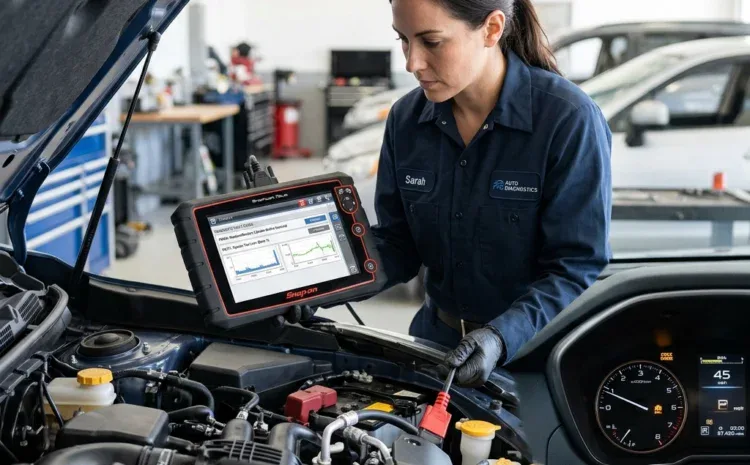
When you bring your vehicle to Frontier Repair & Towing for engine diagnostics, you aren’t just getting someone with a cheap code reader from the local auto parts store. We use state-of-the-art diagnostic equipment that goes far deeper than the surface codes.
Step 1: The Digital Handshake
We connect our advanced scanners to your vehicle’s ECU to retrieve the stored trouble codes. This gives us a starting point: the “symptom.”
Step 2: Real-Time Data Analysis
A code is just a clue. If the code says “O2 Sensor Lean,” it doesn’t always mean the sensor is bad. It could mean there’s a vacuum leak or a fuel pump issue. Our technicians look at real-time data streams while the engine is running to see exactly what the sensors are seeing.
Step 3: The 40-Year Experience Check
This is where Frontier stands out. We’ve been serving the Mt. Vernon community for over 40 years. We’ve seen every make and model, from vintage classics to the latest hybrids. Our team combines the data from our high-tech tools with four decades of mechanical “gut feeling” to find the root cause of the problem, not just the symptom. We’re not here to guess with your money; we’re here to fix it right the first time.

Myth-Busting: “I Can Just Reset the Light Myself”
We see this a lot. Someone unplugs their battery or uses a basic tool to “clear” the code, hoping it stays off. Here’s the problem: clearing the light doesn’t fix the issue. It just makes the car “forget” it was sick for a few miles.
The computer will eventually run its self-tests again, realize the problem is still there, and pop the light back on. Even worse, if you’re heading for an emissions test, clearing the codes will cause you to fail automatically because the car’s internal monitors will show as “Not Ready.”
Your Local Mt. Vernon Neighbors
At Frontier Repair & Towing, we don’t just see cars; we see the people who drive them. We know you rely on your vehicle to get to work, drop the kids at school, and enjoy your weekends. When you look for “car repair near me,” you want someone you can trust: someone who’s going to tell you the truth and get you back on the road safely.
Whether you need a simple oil change or a deep dive into your engine’s electronics, we’ve got the tools and the talent to handle it.
Don’t Let the Light Spook You
The “Check Engine” light is your car’s way of asking for a little TLC. Treat it with the respect it deserves, and your car will return the favor with years of reliable service. If that amber glow is staring you in the face today, don’t let it stress you out.
Give us a call or schedule an appointment today. Let’s get your car back to its happy, healthy self so you can drive with peace of mind.